

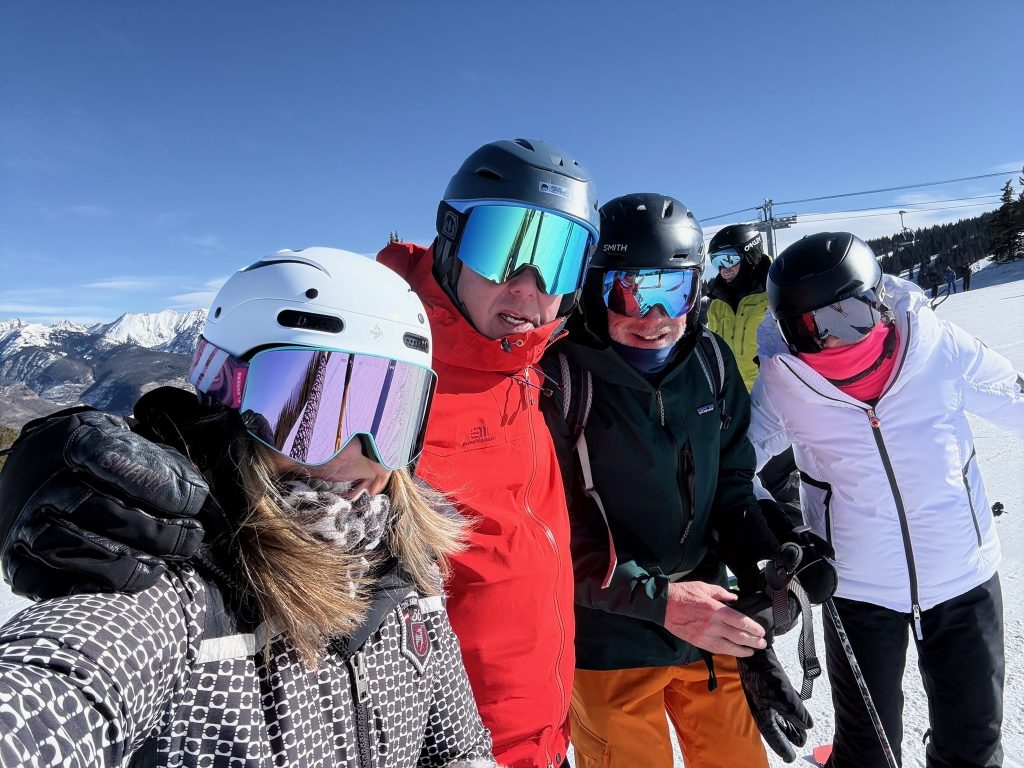
2026 is off to a strong start (real estate wise) and I’m excited that we finally recieved some significant snowfall in the last week or so. The team at Vail Mountain has been working overtime to make the experience as good as possible, but no doubt, the fresh snowfall made a huge difference! It’s that time of year where client meetings often take place in between runs on the chairlift because sharing the lifestyle is the biggest reason we all choose to live here.
Here’s a quick recap of my 2025:
- Proud to close over $46M in property sales
- Worked with 8 sellers and 12 buyers
- 13 homes were in golf course communities
- 5 homes were ski area homes
- 25% of my clients were repeat clients
- The 2025 edition of my lifestyle magazine The Little Blue Book™ saw over 100K digital impressions
Ask me about new listings coming soon…
In This Newsletter:
- Vail vs. Aspen: Who Ruled In 2025 – In the world of luxury Colorado real estate, few comparisons spark more conversation than Vail and Aspen. Both markets continue to attract global attention, significant wealth, and long-term buyers, but 2025 revealed some meaningful differences in how each performed. From pricing power and buyer behavior to time on market and transaction volume, this year’s data offers a clear look at how these iconic ski destinations stack up. Not just for buyers and sellers, but for anyone watching the evolution of high-end resort markets.
- Year-End 2025 Micro Market Reports – 2025 brought stability to Colorado’s Front Range after several years of unpredictability and in Q4 the market experienced more confident and informed buyers. Fueled by an increase in inventory and slightly lower interest rates, which remain around 6% (or finally, a little less), normalcy is replacing speculation.
As always, thank you for reading and being part of this community. If you’re thinking about buying, selling, or simply want to chat about the market or local lifestyle, I’d love to connect – just reply or reach out directly.

Vail vs. Aspen: Who Reigned Supreme?
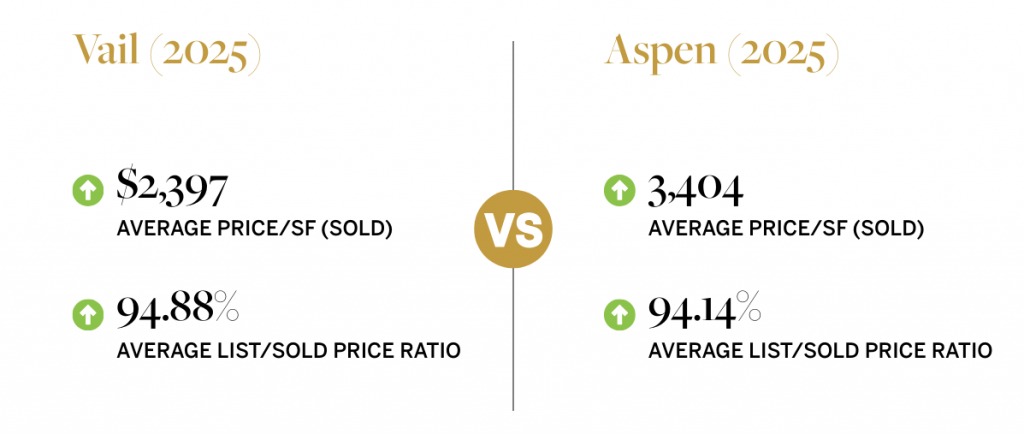
In 2025, both Vail and Aspen continue to command attention as premier alpine real estate markets in Colorado, but they’re telling slightly different stories. Vail saw fewer closed properties year-over-year, signaling a more selective and deliberate market. Even with reduced transaction volume, prices continued to trend upward, reinforcing Vail’s position as a market defined by long-term ownership, limited inventory, and patient buyers. Homes are taking longer to sell, suggesting that pricing strategy and property quality matter more than ever.
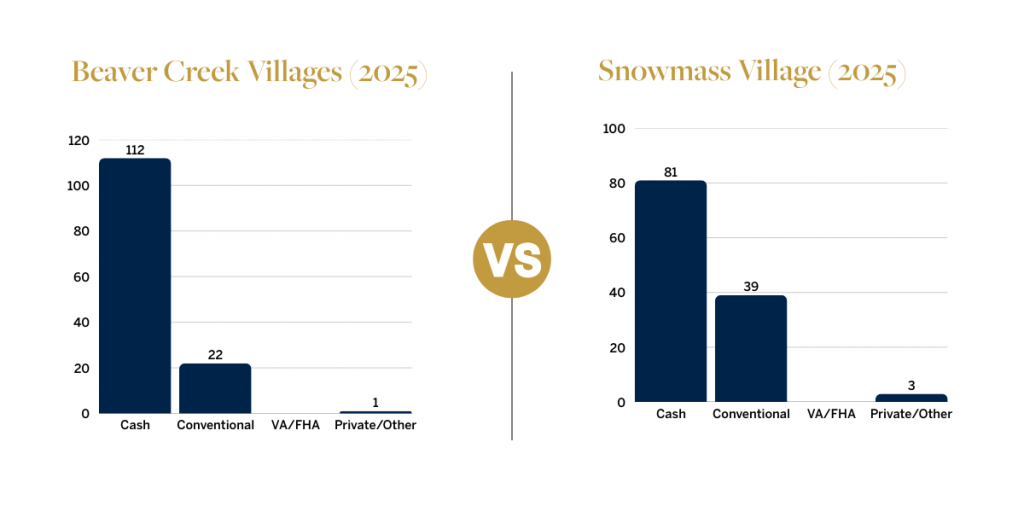
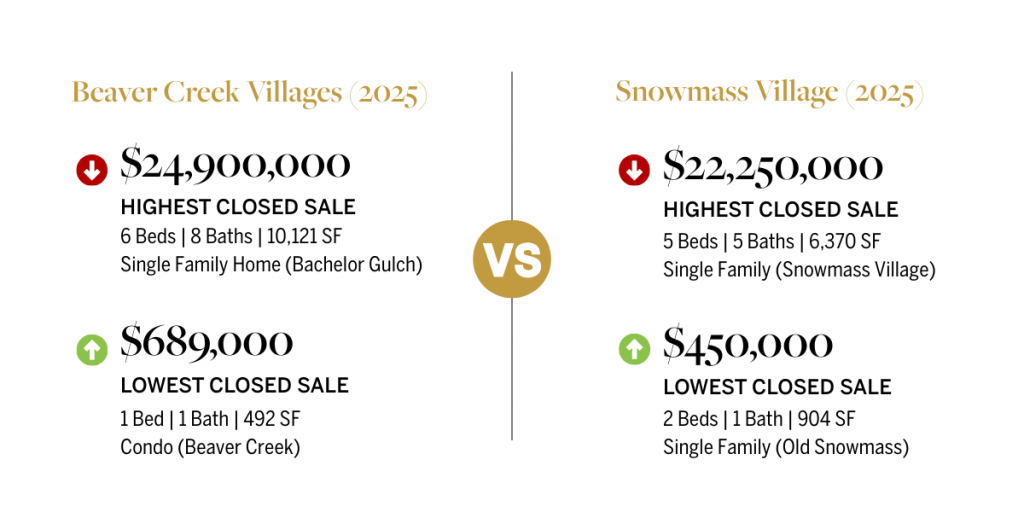
Reader’s Note: the specifications of what areas and property types define these statistics is at the bottom of this section. Additionally, the red and green arrows indicate change in 2025 over the prior year (2024).
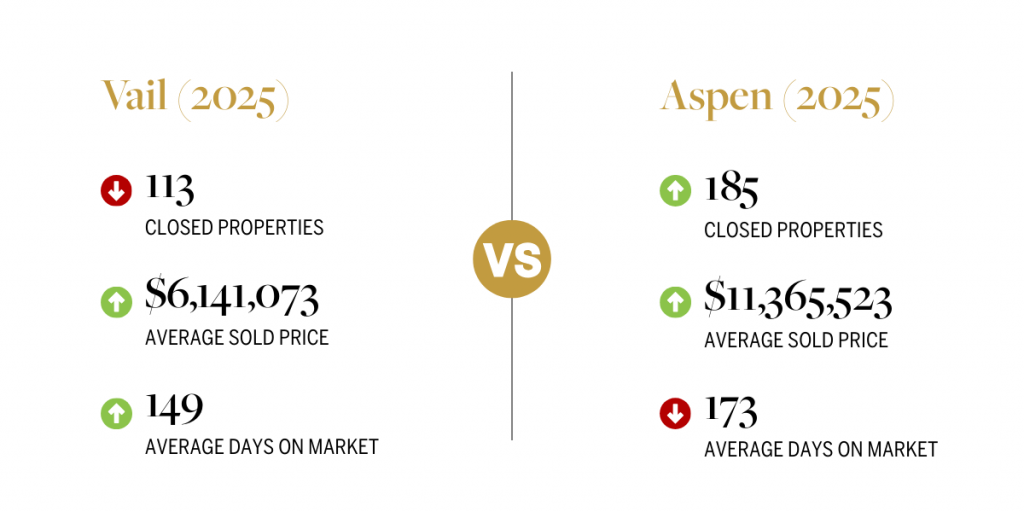
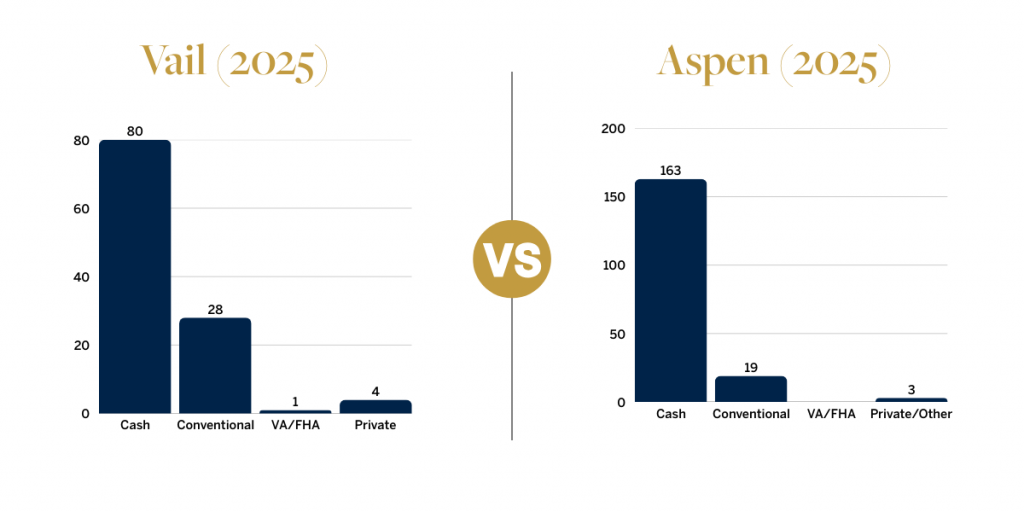
Aspen, by contrast, experienced increased sales activity in 2025 alongside rising average prices. While homes are still moving slowly by national standards, days on market decreased year-over-year, pointing to sustained demand at the highest end. Aspen’s pricing power remains unmistakable, with higher averages across nearly every metric and a continued dominance of cash buyers shaping the pace and structure of transactions. At a glance, Vail reflects a steadier, lifestyle-driven market, while Aspen continues to operate as a global luxury benchmark where scarcity and prestige drive values.
Both markets remain overwhelmingly cash-driven, with Aspen showing an even higher concentration of cash purchases. Average list-to-sold price ratios remain strong and nearly identical with Vail at 94.88%, and Aspen at 94.14%.
What This Means For Buyers
- Vail may offer slightly more room for negotiation, especially with longer days on market.
- Aspen remains highly competitive at nearly all price points, with cash buyers setting the tone.
What This Means For Sellers
- Pricing precision matters in both markets, but especially in Vail, where buyers are taking their time.
- Aspen sellers continue to benefit from global demand, even as transaction timelines stretch.
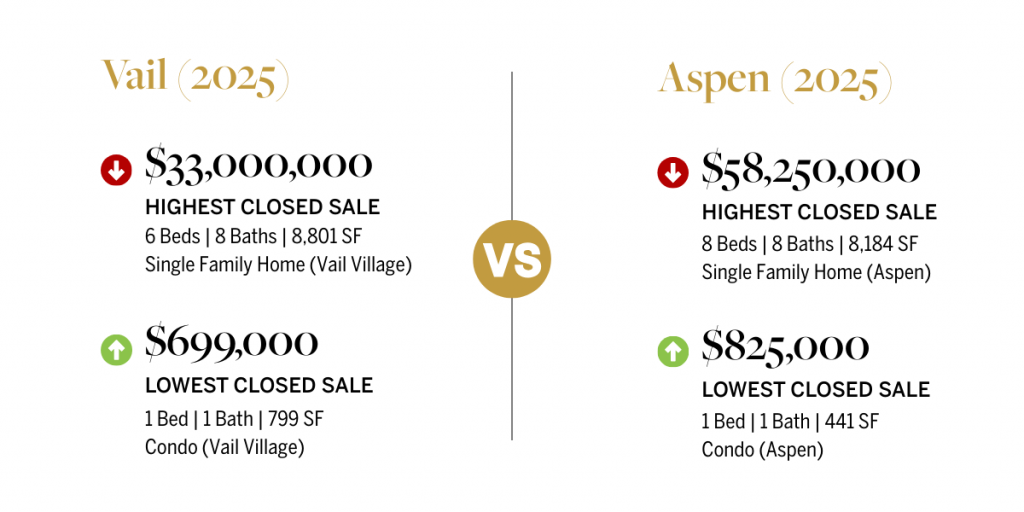
*One of the year’s most significant transactions occurred just outside Aspen, where the historic St. Benedict’s Monastery in Old Snowmass sold for a reported $120 million, marking the largest residential land transaction in Pitkin County history.
For Market Watchers
- Both markets show price resilience despite shifts in volume.
- Luxury mountain real estate remains a long-term hold, driven less by short-term cycles and more by scarcity, lifestyle, and legacy ownership.
Key Takeaways
- Aspen commands higher prices and more activity, but with little compromise on value.
- Vail remains a stable, lifestyle-forward market where patience and quality win.
- Cash is king in both markets.
- 2025 reinforces a familiar theme: these are not fast markets, but they are durable ones.
Buyer Profiles: Vail vs. Aspen
While both Vail and Aspen attract ultra-high-net-worth buyers, the motivations behind those purchases often differ, and the data supports that distinction. Aspen is frequently cited for its concentration of billionaires, and that global wealth presence clearly influences how the market functions. Buyers in Aspen are often acquiring property as part of a broader portfolio strategy, prioritizing exclusivity, privacy, and long-term asset positioning over price sensitivity or timing.
Vail’s buyer profile, while still firmly in the luxury category, tends to skew more lifestyle-driven and generational. Many Vail buyers are repeat visitors, legacy owners, or families establishing a long-term foothold in the valley. These buyers may be equally capable financially, but their purchasing decisions are often guided by usability, proximity to skiing, and long-term family enjoyment rather than pure prestige or scarcity.
In short, Aspen’s market is shaped by global capital and concentration of extreme wealth, while Vail’s market reflects deep-rooted emotional connection and sustained lifestyle use – two very different, yet equally powerful, drivers.
What the Buyer Behavior Tells Us
Vail Buyers
- More family-oriented and multi-generational ownership
- Strong emotional attachment to the valley and ski lifestyle
- Often planning for long-term use rather than short-term appreciation
- More thoughtful pacing in decision-making
- Value proximity, functionality, and year-round livability
Aspen Buyers
Higher concentration of ultra-high-net-worth individuals and global buyers
Purchases often tied to wealth preservation, diversification, and status
Less price-sensitive, but highly selective
Strong preference for privacy, exclusivity, and trophy properties
Shorter decision windows once the “right” property is identified
Why This Matters (Even If You’re Not Buying or Selling)
- Buyer composition directly impacts pricing stability, days on market, and negotiation dynamics.
- Aspen’s billionaire presence helps support record-setting prices, even during slower cycles.
- Vail’s lifestyle-driven buyers contribute to consistency and resilience over time.
- Both markets benefit from cash-heavy buyers, but for very different reasons.
Key Takeaway
Aspen and Vail are not competing markets; they’re serving different luxury buyers. Aspen operates as a global luxury destination shaped by extreme wealth and scarcity, while Vail thrives as a legacy mountain community rooted in lifestyle, family, and long-term ownership. Understanding who the buyers are and why they buy, helps explain why both markets continue to perform, even in changing conditions.
Beaver Creek Villages vs. Snowmass Village
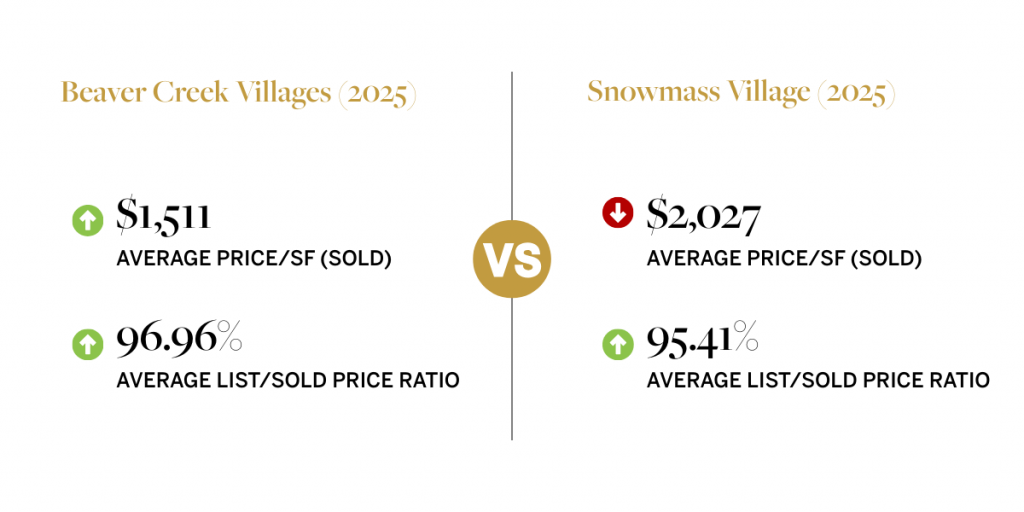
Last year, Beaver Creek and Snowmass Village presented two distinct interpretations of luxury mountain living – both elevated, but shaped by different priorities. Beaver Creek continues to operate as a highly refined, service-oriented market where proximity to ski access, managed communities, and turnkey ownership play a central role. Despite fewer closed sales year-over-year, average prices rose and homes moved more efficiently, underscoring steady demand for well-positioned properties.
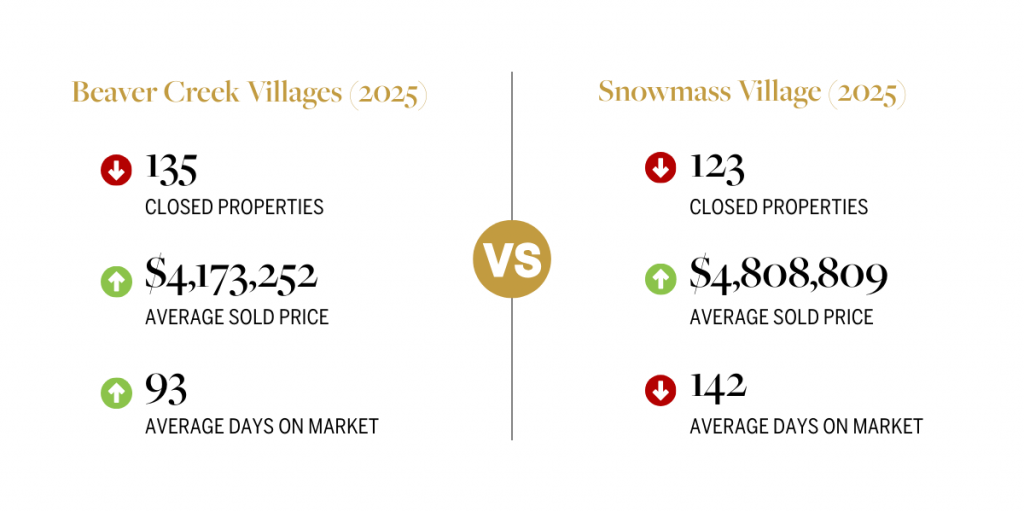
Snowmass Village, meanwhile, reflects a market still in transition. With significant long-term investment and infrastructure improvements underway, Snowmass continues to attract buyers looking ahead rather than buying for immediate gratification. While average sold prices increased, longer days on market suggest a more deliberate buyer pool – one that is selective, value-conscious, and often motivated by future upside rather than instant liquidity.
At a high level, Beaver Creek reads as polished and predictable, while Snowmass offers more range and opportunity—appealing to different types of luxury buyers.
What This Tells Us About Buyer Behavior
Beaver Creek Buyers
- Typically chosen for less crowded conditions and lower skier volume
- Often prioritize ease, service, and ski-in/ski-out convenience
- Drawn to managed communities and turnkey residences
- Tend to move more decisively once a property meets criteria
- Strong appeal to second-home owners and legacy families
Snowmass Buyers
- Often seen as superior ski terrain compared to Aspen Mountain
- More value- and future-focused
- Willing to trade immediacy for long-term potential
- Comfortable with a broader range of property types and pricing
- Often entering the market earlier in the area’s growth cycle
Why This Matters (Even If You’re Not Buying or Selling)
- Faster absorption in Beaver Creek supports pricing confidence for sellers.
- Snowmass offers greater entry-level accessibility and broader pricing range.
- Buyers in Snowmass may find more opportunity, but should expect longer timelines.
- Both markets continue to benefit from limited inventory and destination appeal, even as buyer behavior diverges.
Key Takeaways
- Beaver Creek remains a streamlined, service-forward luxury market.
- Snowmass Village reflects a longer-term growth story with more variability.
- Days on market highlight a clear contrast in buyer urgency.
- Both villages show price resilience in 2025, but for very different reasons.
My Take: Two Markets, Two Definitions of “Winning”
When you step back and look at the data, one thing becomes clear: there isn’t a single winner – only different definitions of what it means to “rule.” Aspen continues to set the bar for global luxury, commanding higher prices and drawing an ultra-high-net-worth buyer profile driven by scarcity and prestige. Vail and Beaver Creek, on the other hand, demonstrate remarkable consistency, lifestyle appeal, and long-term stability rooted in usability, community, and generational ownership. Snowmass rounds out the picture as a market focused on future growth and opportunity. Together, these resort communities show that strength in luxury real estate isn’t just about headline numbers – it’s about alignment with buyer intent.
Now I’ll Ask You…
Which market do you think reigned supreme in 2025 – prestige, lifestyle, opportunity, or long-term value?
Whether you’re actively buying or selling, planning ahead, or simply exploring what’s possible, I’m always happy to talk strategy. If you’re considering a move in Vail, Beaver Creek, or any other luxury mountain market – or looking to understand how today’s data impacts your long-term goals – reach out anytime. These markets reward informed decisions, and the right timing looks different for everyone.
*Data Source: Vail MLS for residential property types including Single Family, Condominium, Duplex, Triplex, and Townhomes (excluding fractional ownership). The area of “Vail” is defined for these purposes as: Vail Village, Lionshead, Cascade/Glen Lyon, Spraddle Creek and Vail Golf Course, Highland Meadows, Potato Patch and Buffehr Creek. The area of “Beaver Creek Villages” is defined for these purposes as: Beaver Creek, Bachelor Gulch and Arrowhead.
**Data Source: Aspen MLS for residential property types including Single Family, Condominium, Duplex, Half Duplex, and Townhomes (excluding fractional ownership, hotel condominiums, and residential income). The area of “Aspen” is defined for these purposes as the city of Aspen. The area of “Snowmass” is defined for these purposes as: Snowmass Village and Old Snowmass.

Ask me about potential opportunities for off-market properties!
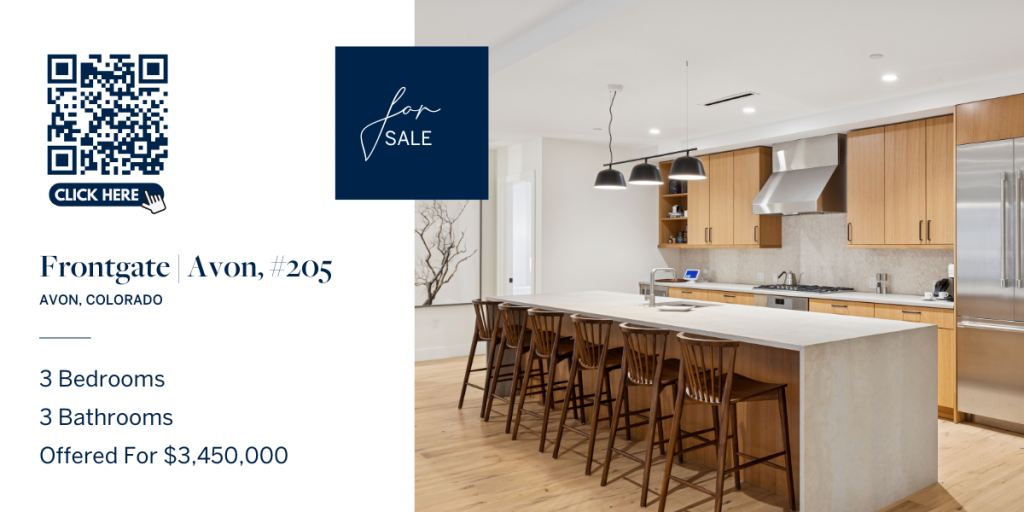
Currently the only available 3-bedroom, 3-bath residence at the coveted Frontgate | Avon, this impeccably designed residence 205 combines sophisticated mountain living with unparalleled amenities. One of the most spacious three-bedroom layouts in the complex, it features 9-foot ceilings in the inviting open-concept great room, and a generous 164 sq ft patio that opens directly onto the serene Mountainside Courtyard – an ideal setting for indoor-outdoor entertaining. Offered beautifully furnished, this turnkey retreat allows for an effortless transition into your mountain lifestyle…..VIEW MORE DETAILS
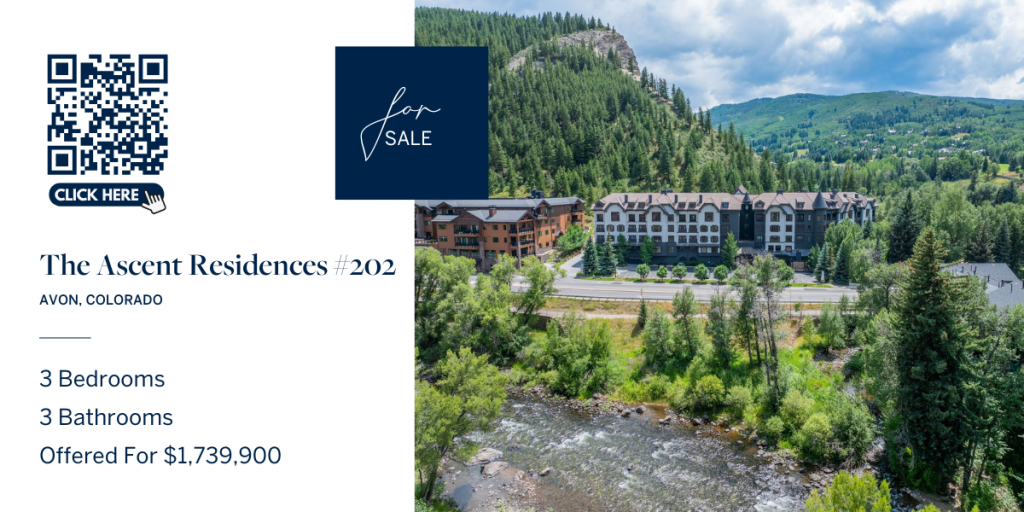
Co-Listed With Leigh Flanagan
Private Creekside Corner Residence with Luxury Amenities: Located just to the east of the gates to Beaver Creek, The Ascent provides luxury residences and exceptional amenities, just steps to the Eagle River and paved path, Nottingham Lake and Park, and all that the town of Avon has to offer. Residence 202 is ideally positioned on the far west end of the building w/peaceful northwest views overlooking the Beaver Creek stream & mature trees. This 1,639 SqFt residence features a functional kitchen layout w/timeless granite….VIEW MORE DETAILS
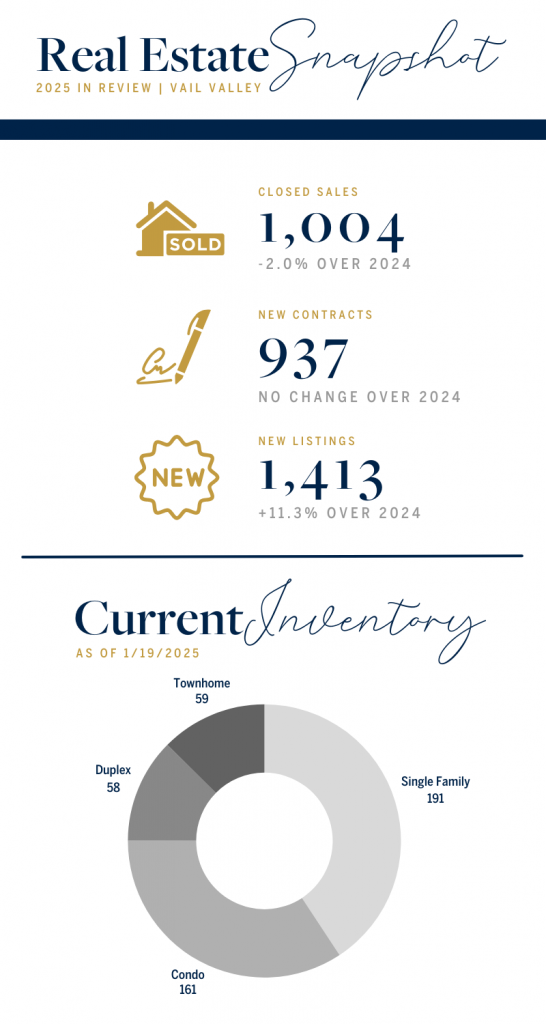
Year-End 2025 Micro Market Reports
2025 brought stability to Colorado’s Front Range after several years of unpredictability and in Q4 the market experienced more confident and informed buyers. Fueled by an increase in inventory and slightly lower interest rates, which remain around 6% (or finally, a little less), normalcy is replacing speculation.

Buying or Selling a home is one of the most important financial decisions we can make and having an expert advisor who has the knowledge for the best results, with market insight, and a network to help support your unique potential, is essential. Whether you’re thinking about buying or selling, want to stay informed, or building the life you love, our latest Quarterly Market Report offers expert insights to help you navigate the market with confidence.
VIEW YEAR END 2025 MARKET REPORTS